Wednesday, April 27, 2011

Yes, Another Book That You Need to Read

Hello all,

So I realized this morning as I was putting together blog material for the week that I have spent a lot of time reviewing books. Hopefully that's okay with you! If you ever want to hear something different, just let me know. There are just so many cool books to read...


This week I want to talk about a newly released book out from OSU Press. It's called Voodoo Vinters, and the author Katherine Cole, writer for MIX magazine and the Oregonian, has put together for us a fabulous introduction into biodynamic farming and winegrowing.

If you aren't familiar with it, biodynamic farming is a agricultural system that was developed in the early 20th Century by the visionary philosopher and spiritual leader, Rudolf Steiner. Sometimes labeled "uber-organic," biodynamics take an intensive, homeopathic, radically local approach to farming. Off-farm inputs are strongly discouraged, and are replaced by applications of carefully prepared compost and specially "brewed" preparations. Herbicides and fungicides are replaced by homeopathic teas made from nettles, horsetail, and yarrow. Planting and harvesting are timed with lunar cycles. ...And then there's the more "woo-woo" stuff, like capturing cosmic rays to improve plant growth, monitoring the changing auras around your plants to determine their needs, and so on. Because of some of its more new-agey and unscientific elements, biodynamics is often dismissed as witchcraft or, as the book's title suggests, voodoo.

Cole does an admirable job in her book of balancing a tongue-in-cheek assessment of some of biodynamic's more "far out" practices with a historical and on the ground analysis of the school of thought as a whole. She comes to the conclusion that biodynamics is simply a very intensive approach to farming that focuses on promoting health rather than doing no harm (as the organic approach does), and in promoting health it drives farmers to pay very, very close attention to every aspect of their operation. As a consequence, these farmers have a heightened appreciation for the importance of biodiversity on their land, for feeding and nurturing the soil using preparations and tillage, and for watching their plants for signs of stress and then healing them. Overall it is a fascinating and compelling approach to farming that has its own unique merit.

Wound into the book's exploration of biodynamic farming more generally is an exploration of the growing influence of biodynamics in Oregon winegrowing. Cole profiles numerous well-known local vineyards and wineries who are employing biodynamic practices with stupendous results. Maysara, Brick House, Montinore, Cooper Mountain, and many other well-known names are discussed in this book. Each vinter has their own unique reasoning behind going biodynamic (or not, as is the case with the highly respected Sokol Blosser Winery), unique approach to applying biodynamic practices on their land, and unique viewpoint on the importance of biodynamics to the industry as a whole. Cole comes away from her experiences on these vineyards and from drinking their wines with two main conclusions: (1.) biodynamic winegrowing creates some fantastic wines, and (2.) that there does seem to be something special going on among the biodynamically grown vines that grace many south-facing slopes in the Willamette Valley. You'll have to read it and see what you think!


Another reason that I wanted to feature this book is that the author will be in town soon! On May 19th Katherine Cole, and guests from five of the vineyards she talked about in her book, will be at Third Street Books downtown for a book reading and discussion about biodynamic winegrowing in Oregon. It is sure to be a fascinating event! See the specifics listed at the bottom if you want to attend!

Take care.


EVENT DETAILS

Where: Third Street Books, 334 NE Third Street, McMinnville
When: 7pm
Featuring: Katherine Cole (author of Voodoo Vinters), Patrick Reuter (of Dominio IV), Josh Bergstrom (or Bergstrom Wines), Kelley Fox (of Kelley Fox Wines), Brian O'Donnelle (of Belle Pente), and Doug Tunnell (of Brick House Vineyards).

Preregistration is encouraged. Call at 503.472.7786.

Friday, April 22, 2011

Learn About Honeybees: "Queen of the Sun"

Hi all!


Thought I'd pass on to you a cool event happening in honor of Earth Day!

Queen of the Sun is a new documentary that tries to answer the question "what are the bees telling us?" If you live in the area, you've probably heard that local hives have been struggling with a malady known as colony collapse disorder: essentially, the hives disappear without a trace. This occurrence remains largely unexplained, and is having a serious effect on local industries--from honey to fruit and nut trees. Honey bees are man's pollinator of choice, and with hives proving unsustainable, scientists and farmers alike are trying to figure out what to do to save the bees.

Queen of the Sun is produced by the same folks who made The Real Dirt on Farmer John, an entertaining and insightful film about what happened when one Mid-West farmer went organic in the heart of America's modern industrial agriculture. All bodes well for this newest effort. Check out their website for more information and to watch a trailer:

http://www.queenofthesun.com/

The film itself is showing in several Oregon locations starting today. If you have a free moment, check it out!

in Portland at the Hollywood Theatre
in Salem at Salem Cinema
in Eugene at Bijou Arts Cinemas


Enjoy the sun!

Wednesday, April 20, 2011

Learning from a Northwest Garden Guru

Good day!

So now that it feels a little more like spring out there, I have been delving into my gardening books. I'm learning so much! Sounds silly to say so, but I think that sometimes you aren't ready to absorb a particular book. Then you come back to it, and you're thinking "wow!" all the way through.

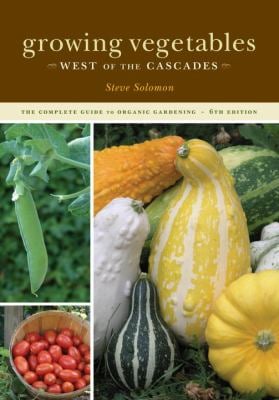
Of late, my "wow" feeling has been focused on Steve Solomon's classic book, Growing Vegetables West of the Cascades. I have known about this book for years, thanks to my mom who is an avid gardener. It was usually laying somewhere around our living room, peppered with sticky note markers. I recently bought my own copy, and have been reading it religiously with my morning coffee. There's so much to learn! I have read other gardening books, equally inspiring, but Solomon points out that most gardening books are written based on gardening practices that work back east or in the mid-west, or in California. It makes a lot of sense: those regions have long histories of vegetable cultivation on all kinds of scale. As useful as these texts are (you can't say that Eliot Coleman's genius isn't inspiring), they don't address the unique challenges faced by gardeners who live in the Pacific Northwest and particularly west of the Cascades.

Here, vegetable growers face a myriad of problems: heavy clay soils, generally poor soil quality (low in trace minerals and overly high in potassium), winters-long leaching of nutrients thanks to the never-ending rains, a lack of widely-available high quality compost, difficulty in making good, nutrient dense compost at home. The list goes on and on. Solomon addresses all of these issues in turn, drawing on decades of experience growing vegetables in this unique region. He explains why mainstream gardening techniques fail here, and provides the reader with working alternatives.

Solomon also writes with a healthy dose of humor and honesty--joking about his failures, making fun of the reader while acknowledging the difficulties we face, and being totally honest about the back-breaking nature of some of the extra work we "west-of-the-cascaders" have ahead of us. He also unapologetically changes his mind: the book, now in its 6th edition, is a constant work in progress. It contains years and years of gardening wisdom. I can't recommend it highly enough.


Another great gardening resource that I lean on heavily is The Maritime Northwest Garden Guide, published by Seattle Tilth. This is a great little magazine-size guide to planting schedules, trouble-shooting, and more. It is also specific to our rainy, cold soil situation. Check it out!


Both of these resources are available from your local bookstore, Third Street Books. Walk downtown, save the drive, and support a local business! Happy reading!

Enjoy your week.

Friday, April 15, 2011

La Casa Verde and Permaculture 101

Hello all!

Slow Food Yamhill County is very excited to be participating in La Casa Verde this weekend! La Casa Verde is an annual green building celebration that offers all kinds of workshops and information booths about green architecture, landscape, and living. It is happening all weekend in the granary district here in McMinnville.

This year, SFYC is presenting a talk on Permaculture. Permaculture is a design model and agricultural system that is intended to be permanent and self sustaining. It focuses on using available resources, minimizing waste, and creating rich, diverse environments in which to grow food and live a whole lifestyle. Below is a graphic that captures a few of the central ideas of permaculture systems.


If you're interested in learning more, come to the SFYC Permaculture presentation! It will be happening from noon to 1pm, and the presenters will be at Slow Food's information table afterward to answer questions.

Also stop by the Slow Food table to enter to win an awesome gift basket featuring local veggies, wine, and olive oil! Tickets are $1. You do not need to be present to win.

We hope to see you there!

Friday, April 8, 2011

Farm Fest!

It might even be sunny for this fun farm event! We're not officially affiliated, but a plowing contest sounds like good fun for all.

Check it out here!

The Basics:

Farm Fest

Put on by: Yamhill County Historical Society
Where: The Yamhill County Heritage Center (head out 18 toward the coast, it's just outside town on your left)
When: THIS SATURDAY (a.k.a. tomorrow) from 10am-3pm
Entry: $3


Also, it has been brought to my attention that commenting on our blog isn't working too well. I'll do my best to figure out why that is and let you know the steps to commenting soon! Keep in mind that we are somewhat limited by the server... so you may need to create a shell Google account to comment. I'll let you know the details ASAP!

Wednesday, April 6, 2011

Fridge Sins

Hi all. Hope the nutty spring weather is keeping you entertained!


Today I thought I’d write about a funny realization I had recently while debating whether or not I wanted to tackle cleaning out my fridge. The weather was too spotty to really make me want to do anything outside, so I was working on being productive around the house. Per usual, this meant I wandered around for a half-hour or so before deciding I’d rather try out a new recipe for no-knead bread than clean anything (why do the dishes if you’re just going to make more, right?).

In the course of my wanderings, I also stood with my fridge door open for an unacceptably long time. The contents in one word: messy. There was the normal bit of sour milk and dubious leftovers in Tupperware. A head of wilted lettuce that made me search the door for salad dressing. And what did I find there? A bottle of balsamic vinaigrette with approximately one half-teaspoon left at the bottom (useful). An older, emptier bottle of raspberry vinaigrette that I’m pretty sure I inherited when I moved out of my old apartment. An equally empty ketchup bottle, a few random mustards I scarcely remembered buying. Tabasco sauce. Soy sauce. More sauces. Kraft Mayo in a squeezable plastic jug.

Hmm. This is getting embarrassing.

But we all have our fridge sins, right? It might be that sour cream growing Technicolor mold at the back of the bottom shelf. Or the spilled something that makes everything around it sticky, but you studiously ignore. Maybe a half-eaten can of Taco Bell brand “refried beans.” I think for me, in addition to a couple of the above, I realized that I have an awful lot of condiments in there that I spent money on but rarely use. Most of which are likely easy to make. Most of which contain various unpronounceable ingredients, ingredients of dubious origin, ingredients that generally don’t jive with my attempts to eat locally, seasonally, and sustainably…

Thus, I have made a resolution. No more bottled salad dressing for me. This seemed the easiest point of departure, given that I have no access to tomatoes to make my own ketchup right now and making my own mustard sounds ambitious. And I have no idea how to approach soy sauce except doing some research. But salad dressing is pretty easy: I’ve whipped up vinaigrettes before after all. No problemo. Plus, this is a good reason to collect bottles of olive oil and walnut oil and various delectable sounding vinegars that I admire regularly but have yet to invest in. New food horizons, hooray!


What are your fridge sins? What items do you buy because they’re convenient, even when your little slow-foodie conscience scolds you for it? (You don’t need to admit to mold or sticky messes though… I know you’re more virtuous than that.)

Check out the recipes page for a couple of salad dressings that I am very much looking forward to making!


Stay dry out there.

Wednesday, March 30, 2011

It's Hot Out There

Okay, not really. Well, it is kind of warm. I have been overheating in my favorite winter garb lately, which is an encouraging sign: we have spring temperatures even if the sunshine hasn't arrived.
But when I say "hot," I'm talking in a grander sense... yep, I'm going to talk about that oft-divisive subject: climate change. Mostly, I want to give you a heads up about a really great book that recently came out on the topic.


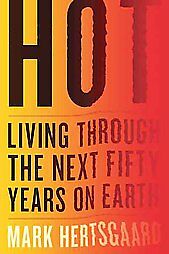
Mark Hertsgaard is a well-respected environmental journalist with more than a decade of experience reporting on climate change and its numerous effects across our planet. His most recent book, Hot: Living Through the Next Fifty Years on Earth, is a superbly written treatise on the current climate situation, and the ways we can and are approaching the threat it poses to our present way of life. It covers everything from water, to soil, to air, to human beings struggling both in America and across the world to come to terms with the changes we are seeing in our environment.

The chapter in this book on food, aptly titled "How Will We Feed Ourselves?" maneuvers and explains the complicated annals of modern agriculture, traveling from the African Sahel to Central California and beyond. It also explores the resiliency of modern food systems in the face of climate pressures. The news, honestly, isn't great: soils are wearing out and blowing away, water tables are over-tapped, pollution is rampant, GMO crops aren't living up to their promises, biodiversity is threatened, and hunger remains widespread. Depressing much?

This is where Hertsgaard's book sets itself apart though: he finds reasons to hope! In his travels in Africa, he meets rural farmers who are reclaiming their lands from the desert by employing simple techniques that fall under the imposing title "farmer-managed natural regeneration." Basically, they dig small depressions around the bases of their plants, which helps the soil at the base of the plant retain water. Adding manure to these depressions further increases production, and as a bi-product, reintroduces native tree species to their land. When they allow these trees to grow, water retention increases even more, again increasing their crop yields. By allowing native tree species to co-habitate with their crops, these farmers are recharging their water table, tying down precious topsoil, increasing biodiversity, and achieving a degree of food security that they have never known. A beautifully simple solution, an effective grassroots movement, and it has reclaimed 1000s of acres of land that previously was wasteland. Amazing.

In Northern China, where almost 80% of that nation's grains are grown, it is expected that the groundwater will be totally depleted by 2030. In less than 20 years, if nothing changes, they will be out of water. Terrifying, right? Well, a few brave scientists in that region are teaming up with students on university-run farms to test centuries-old inter-cropping and fertilization techniques, hoping (and proving) that those techniques yield just as much food as modern, industrial farming techniques, and will also help replenish the water table, rebuild soils, absorb atmospheric carbon, etc. Could this be the start of an agricultural revolution in China, the world's most populous nation? Perhaps.

By now you're probably wondering what this all has to do with our food systems. The answer is, it has everything to do with them. It is expected that by 2050, the Mid West will experience scorching summers 3 years out of 4, putting immense pressure on what is the United States' and the world's bread basket. California's central valley, which produces something like 40% of America's vegetables with experience unprecedented and increasing drought. Increasing temperatures will make life easier for pests and weeds, threatening crops everywhere. The threat is very real, and conventional agriculture systems are not up to the task. They are too rigid, too reliant on fossil fuel inputs, too draining on already scarce water resources, to last.

The good new is, as Herstgaard so kindly delivers to us, that we already know what to do to control a lot of these problems. The knowledge and technology already exists to remake food systems across the world to be more resilient and sensitive to natural resources and rhythms. What stands in the way is our modern, dominant, and monolithic agro-economic paradigm.

What can we do? Grow our own food. Shop in our foodshed. Support sustainable agriculture practices. And put pressure on the companies and policies that are doing so much damage to our present and future food sources. Start locally. As Hertsgaard writes, "[a]griculture is one of the few tricks humanity still has up its sleeve in the race to avoid the unmanageable and manage the unavoidable of climate change."

Slow Food and you can both help in this fight to save our food systems.

Join us!

And if you want to learn more, I highly recommend you read and realize that it's Hot out there.